
TR Constructions LLC | Altadena Rebuild Resource Series
Published February 2026 | Based on information shared at the Altadena Solutions Summit
The TR Constructions team recently attended the Altadena Solutions Summit, a community event where experts shared critical information for families rebuilding after the Eaton Fire. We believe every homeowner deserves access to this information, whether or not they were able to attend. Below is a summary of key takeaways from one of the summit panels. This is educational information only and should not be considered legal, financial, or tax advice. Please consult with licensed professionals for guidance specific to your situation.
One of the most practical panels at the Altadena Solutions Summit focused on financing. Representatives from the SBA, a construction lender (U.S. Bank), and a fund control company walked through real scenarios that Altadena homeowners are facing right now. Here are the key takeaways.
SBA Disaster Loans: The Basics
The Small Business Administration is not just for businesses. During a declared disaster, SBA provides loans to homeowners, renters, and nonprofits as well.
Key Terms to Know
- Homeowners can qualify for up to $500,000 for physical replacement or repair of their home
- An additional $100,000 is available for personal property loss (furniture, belongings, etc.)
- An additional amount up to $500,000 may be available for mitigation, meaning improvements that make the home more resilient against future disasters
- The interest rate is 2.563% over a 30-year fixed term
- No payments and no interest accrue for the first 12 months after the first disbursement
- The first $50,000 is unsecured (no lien required). Amounts above $50,000 require a lien position on the property
These are loans, not grants. They will not be forgiven. However, if you receive a settlement from litigation or other sources down the road, you can use those funds to pay off your SBA loan at any time.
Important: Do Not Disqualify Yourself Before Applying
The SBA representative emphasized that too many families are assuming they will not qualify and never even apply. It costs nothing to apply. If you are approved but decide not to use the funds, you owe nothing. But you need to go through the process to know what is available to you.
The June 30 Deadline
There has been some confusion about the June 30, 2025 deadline. This is not an application deadline. It is a disbursement deadline for borrowers who have already been approved and have reached the end of their extension period. If you have not yet applied or believe you missed the window, reach out to SBA directly because there may still be a path forward.
Construction Loans: What You Should Understand
A construction lender explained how construction financing works and where homeowners often run into complications.
The Lien Position Reality
Construction lenders typically require first lien position on your property. That means if you currently have a 3% mortgage from before the fire and an SBA loan, a construction loan would effectively replace both. You would lose that favorable interest rate. This is a real tradeoff that each homeowner needs to evaluate based on their specific situation.
Alternatives the Panel Mentioned
- Borrowing against retirement funds
- Borrowing against brokerage accounts
- Working with a financial advisor to evaluate the best combination of available resources
The “Being Proactive” Trap
One of the most surprising takeaways was about homeowners who try to get a head start on their rebuild before financing is in place.
Do not start any work on your lot before talking to your lender. Even something as small as placing a porta-potty, putting up a fence, or starting grading can create what is called a “break in priority.” This is a title issue that means a contractor or vendor could file a mechanics lien that takes priority over your construction loan. Lenders take this very seriously and it can delay your financing.
The same applies to moving an RV onto your lot. The panel acknowledged this is understandable given displacement, but from a lending perspective, it can create complications that need to be addressed before financing proceeds.
The bottom line: before you do anything to your property, have a conversation with your lender or a fund control professional first.
Fund Control: Protecting Your Money During Construction
A fund control company (Quick Draw Fund Control) was represented on the panel. Their role is to make sure construction funds are only released as work is completed. Think of them as a financial checkpoint for your project.
How It Works
- No construction funds are released until the corresponding work is verified as complete on site
- Every disbursement requires proper documentation, including invoices and lien waivers
- Progress is verified through on-site observation
- The goal is to make sure there is always enough money remaining to complete the project
Modular and Prefab: Does It Change the Financing?
The panel addressed a common question about whether modular or prefabricated construction changes how financing works.
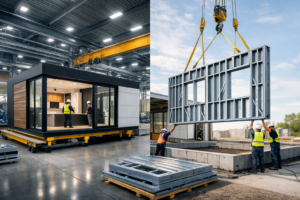
- Modular homes can be financed, but the disbursement schedule is different because work happens off site. Lenders coordinate with the manufacturer on payment timing.
- For off-site construction, lenders may require photographs of materials with the project address labeled, plus certificates of insurance, to verify progress.
- Prefabricated panels (walls built off site but assembled on a traditional foundation) are generally treated similarly to traditional construction.
- If it is on wheels, it cannot be financed. All three panelists confirmed that a home must be on a permanent foundation to qualify for any of these loan products.
Top Advice from the Panel
Do not wait. Material costs and construction costs are rising. The longer you wait to begin the process, the more expensive it gets.
Do not try to build more than what was there. Multiple panelists noted that homeowners who try to add an ADU or convert a single-family home into a duplex using SBA funds are running into problems. SBA funds are for like-for-like replacement. Focus on rebuilding your primary structure first, then explore additions separately.
Assemble your team. A successful rebuild starts with the right team: contractor, lender, fund control, and a clear budget with contingency built in. Do not try to navigate this alone.
About TR Constructions
TR Constructions LLC is a fully licensed Class B General Contractor (CA License #926469) with over 26 years of experience in residential, commercial, and industrial construction. We are actively helping Altadena families navigate the rebuild process. If you have questions about rebuilding your home, call us at (626) 542-1609 or visit trconstructionsllc.com to schedule a free consultation.